PROCESS & OPERATING PHILOSOPHY
Total/partial condensation, reflux generation and vacuum-system duty. The operating sequence, recycle paths, start-up/shutdown cases and normal/turndown behavior are defined before equipment finalization.
 UNKA ENGINEERINGEPC CONTRACTOR
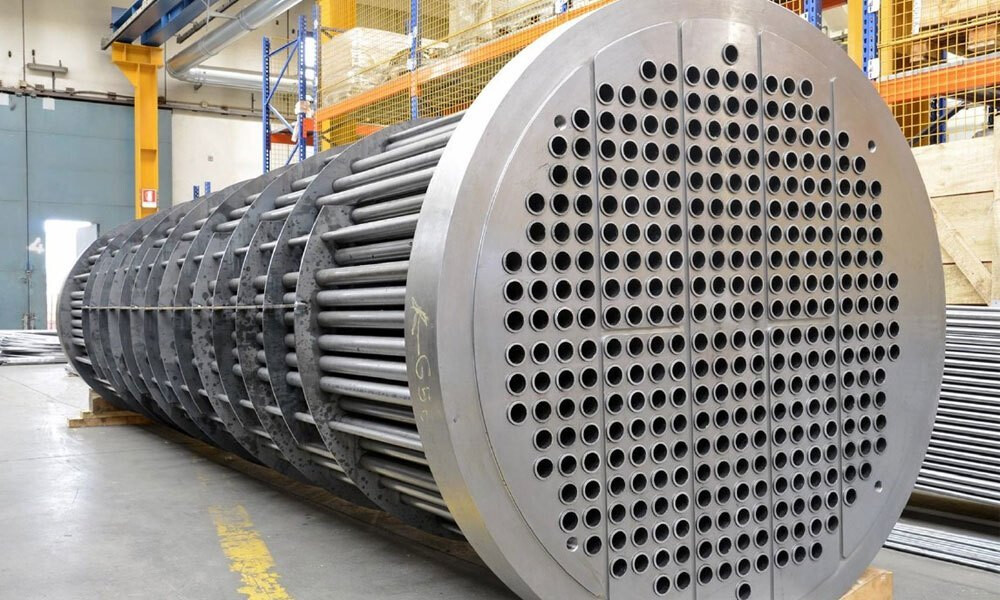
Shell-and-tube condensers and air-cooled heat exchangers configured for vapor composition, pressure level, ambient conditions and non-condensables.

Forced- or induced-draft Air Coolers provide process condensation and cooling with ambient air, reducing cooling-water demand and integrating directly with column overhead and product-cooling services.
Forced draft, induced draft, horizontal or A-frame arrangements.
API 661 and project-specific ASME, material and climate requirements.
Finned-tube bundles, plenums, fans, motors, drives, louvers and supporting steel.
Column overhead condensation, gas cooling and intermediate or final product cooling.
Total/partial condensation, reflux generation and vacuum-system duty. The operating sequence, recycle paths, start-up/shutdown cases and normal/turndown behavior are defined before equipment finalization.
Shell-and-tube or air-cooled arrangement, receivers, vents and drainage interfaces. Materials, design margins, maintainability, isolation, access, lifting and spare philosophy are coordinated with the approved operating cases.
Design/operating cases, fluid properties, corrosion allowance, materials, nozzle loads, wind/seismic data, transport limits, insulation and maintenance clearances.
Thermal design, phase/pressure-drop review, mechanical design and control requirements. The package also includes line/equipment lists, relief and utility summaries, layouts or 3D interfaces, vendor-document requirements, inspection plans and commissioning inputs as applicable.
Code-compliant relief interfaces, access and lifting provisions, inspection hold points, material traceability, qualified welding, NDE and pressure/leak testing.
Column overheads, solvent recovery, vacuum and refrigeration services. Capacity, product quality, consumption and emissions commitments are confirmed only after the representative feed and project Design Basis are approved.
TEMA, API 660/661 and ASME VIII. The contractual code basis is selected by destination and client specification. ASME/API/TEMA, EN/DIN and GOST/EAC requirements are not mixed without an approved code-equivalency and authority review.
TEMA, API 660/661 and ASME VIII.