METHOD & PROCESS PRINCIPLE
Pontoon or double-deck roof and rim seals minimize vapor space while roof drains manage rainfall.
 UNKA ENGINEERINGEPC CONTRACTOR
Large atmospheric storage with a roof directly floating on volatile liquid.
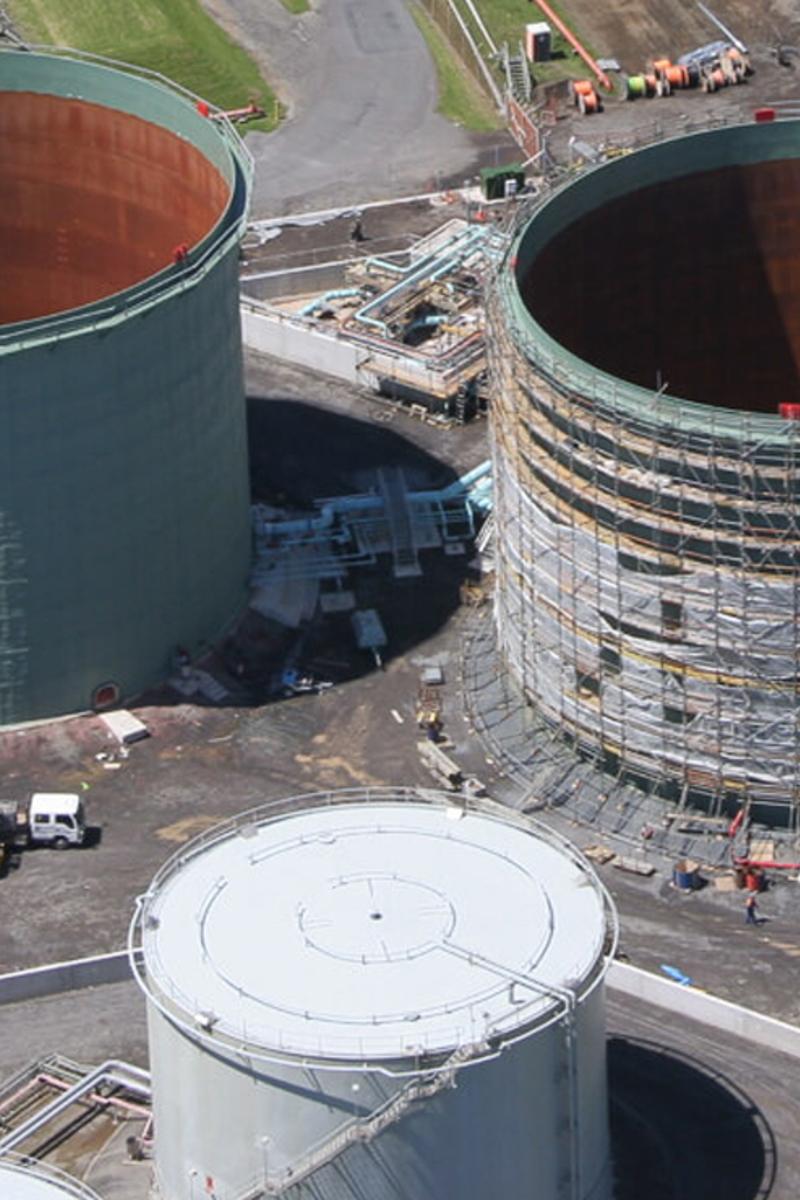
Pontoon or double-deck roof and rim seals minimize vapor space while roof drains manage rainfall.
Tank, floating roof, primary/secondary seals, roof legs, rolling ladder, drain, vents, grounding and foam system.
Stored-fluid properties and classification, required working inventory/autonomy, receipt and dispatch rates, vapor pressure, temperature, corrosion, mixing/heating needs, site wind/seismic/geotechnical data, fire scenario and environmental rules. Rainfall, roof-drain capacity, seal-emission target and wind effects.
Design Basis, heat and material balance where applicable, PFD, P&ID, datasheets, line/equipment lists, layout and 3D interfaces, control and safeguarding documents, inspection plan, operating and commissioning procedures.
Hazard review, alarms and interlocks, relief/vent/drain philosophy, hazardous-area classification, maintainable isolation, fire protection, emergency shutdown interfaces and environmental controls.
Crude oil, large-volume naphtha or other suitable volatile petroleum storage.
API 650 Annex C, API 2000/653, NFPA 11/30; EN 14015/DIN or GOST requirements by contract.
API 650 Annex C, API 2000/653, NFPA 11/30; EN 14015/DIN or GOST requirements by contract.