METHOD & PROCESS PRINCIPLE
An internal deck floats on product and uses primary/secondary seals; fixed roof protects from weather.
 UNKA ENGINEERINGEPC CONTRACTOR
Reduces vapor space and emissions for volatile liquids inside a fixed-roof tank.
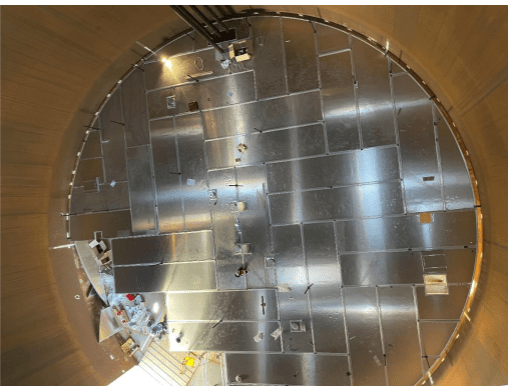
An internal deck floats on product and uses primary/secondary seals; fixed roof protects from weather.
API tank, internal aluminum/steel deck, seals, anti-rotation, vents, gauging, access and grounding.
Gasoline/naphtha vapor pressure, emissions limits, seal materials, fill/empty rate and inspection access.
Design Basis, heat and material balance where applicable, PFD, P&ID, datasheets, line/equipment lists, layout and 3D interfaces, control and safeguarding documents, inspection plan, operating and commissioning procedures.
Hazard review, alarms and interlocks, relief/vent/drain philosophy, hazardous-area classification, maintainable isolation, fire protection, emergency shutdown interfaces and environmental controls.
Gasoline, naphtha, condensate and volatile blend components.
API 650 Annex H, API 2000, NFPA 30, EI/API emissions guidance; EN/DIN/GOST equivalent basis if specified.
API 650 Annex H, API 2000, NFPA 30, EI/API emissions guidance; EN/DIN/GOST equivalent basis if specified.